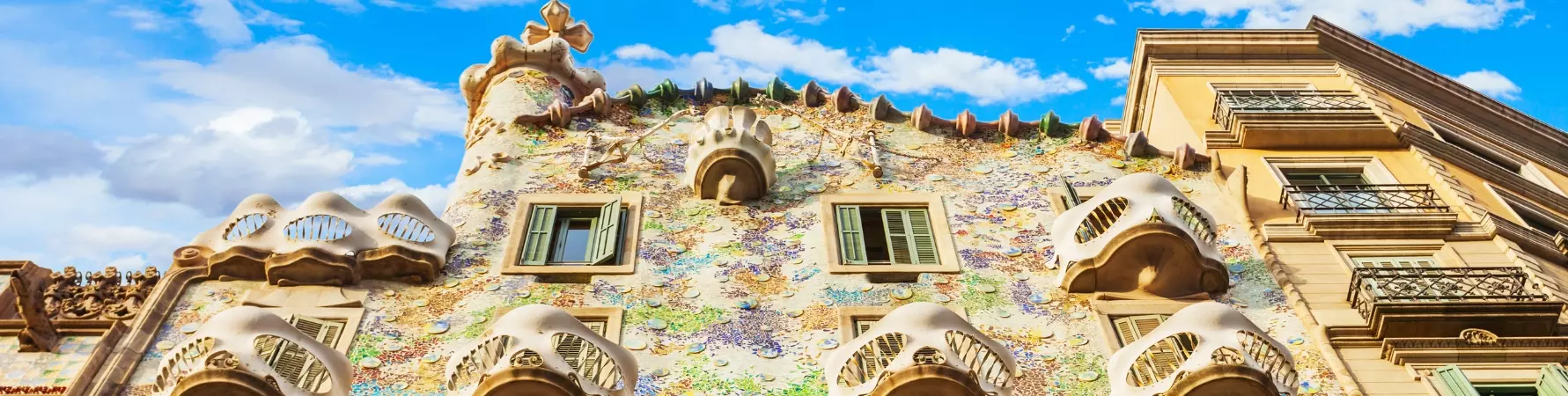




Casa Batlló is, without a doubt, Antoni Gaudí’s most dreamlike and suggestive work. In this building, light, color, and natural forms merge to create one of the most fascinating pieces in the history of world architecture. Located in the heart of Passeig de Gràcia, Casa Batlló is an essential stop on your Barcelona City Tour route. Hop off at the Casa Batlló stop and step into a fantasy universe where straight lines do not exist and every corner defies the imagination of those who observe it.
How to get to Casa Batlló
The most convenient and efficient way to reach Casa Batlló is aboard the Barcelona City Tour. The Green Route has a strategic stop that drops you off just steps from the main entrance, allowing you to enjoy a relaxed journey while admiring the elegance of Barcelona's Eixample district from the upper deck of the bus. By choosing the tourist bus, you avoid metro transfers and the crowds at underground stations, arriving directly at the epicenter of the city's luxury and culture.
Where is it?
Casa Batlló stands at number 43 Passeig de Gràcia, Barcelona's most iconic and luxurious avenue. It is situated in what is popularly known as the "Manzana de la Discordia" (Block of Discord). This name stems from the professional rivalry that existed in the early 20th century among the great Modernist architects: within a single block, Casa Batlló (by Gaudí), Casa Amatller (by Puig i Cadafalch), and Casa Lleó i Morera (by Domènech i Montaner) all compete for the passerby's attention.
Who built Casa Batlló?
Although the original building was constructed in 1877 by Emilio Sala Cortés, but in 1904, the textile industrialist Josep Batlló purchased the building and granted Antoni Gaudí total creative freedom to remodel it.
Gaudí carried out a comprehensive renovation between 1904 and 1906. He changed the facade, redistributed the interior, expanded the light well, and turned the roof into a "habitable sculpture," transforming a conventional house into an absolute masterpiece of Catalan Modernism.
What makes Casa Batlló special?
What makes Casa Batlló unique is its ability to evoke nature and legend. Some of its most special features include:
- The Undulating Facade: Covered using the trencadís technique (a mosaic of ceramic fragments), its colored glass reflects light differently depending on the time of day, simulating the surface of a calm sea.
- The Legend of Sant Jordi: The roof, crowned by a tower with a four-armed cross, represents the back of a dragon with shiny ceramic scales. The bone-shaped stone columns and balconies that look like skulls complete this epic interpretation of Catalonia's patron saint.
- The Light Well: A masterclass in lighting efficiency. Gaudí used a gradation of blue tiles (darker at the top and lighter at the bottom) to ensure that natural light is distributed uniformly across all floors.
- Organic Architecture: You won't find straight angles inside. Doors, windows, and ceilings flow as if they were molded by water or wind, proving that Gaudí was as much a sculptor as he was an architect.
Frequently Asked Questions (FAQs)
When is Casa Batlló free?
Casa Batlló is a privately managed monument and does not offer regular free general admission days with a few exceptions.
Who lives in Casa Batlló Barcelona?
Currently, no one lives there. The Batlló family moved out in the 1950s. Since 1993, the building has been owned by the Bernat family (founders of the Chupa Chups company), who carried out an impeccable restoration and decided to open the building to the world for cultural enjoyment.
What is the best time to visit Casa Batlló?
To avoid large crowds, the best time is early in the morning (9:00 AM) or at midday when most tourists are having lunch. If you are looking for an even more aesthetic experience, sunset is the time when the light best highlights the textures and the brilliance of the facade.


