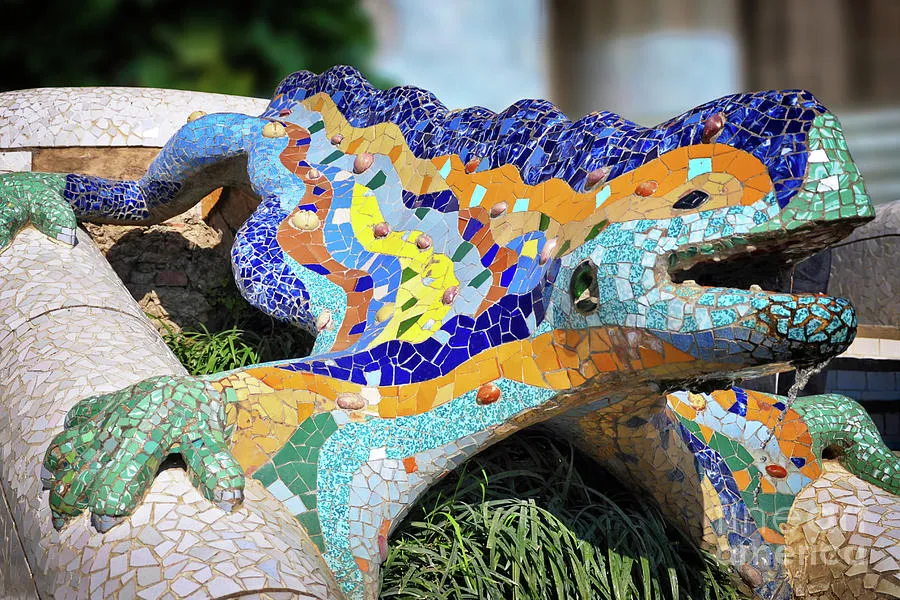


Gaudí’s dragon does not have one single confirmed meaning. This Park Güell figure, also known as Gaudí’s salamander, is associated with nature, water, mythology and Catalan identity. Its location on the monumental staircase suggests that it was designed as part of a symbolic, functional and decorative ensemble welcoming visitors to the park.
What is the Park Güell Dragon?
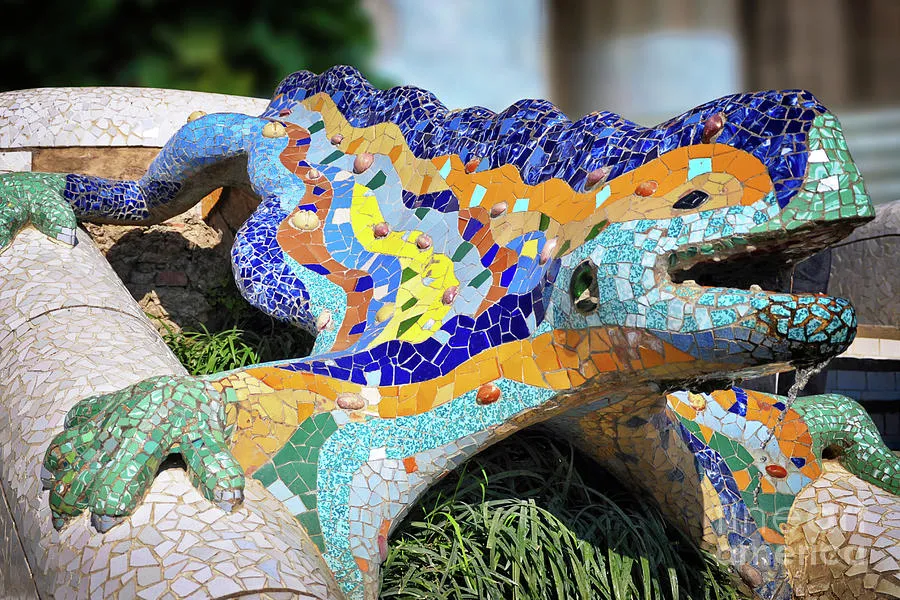
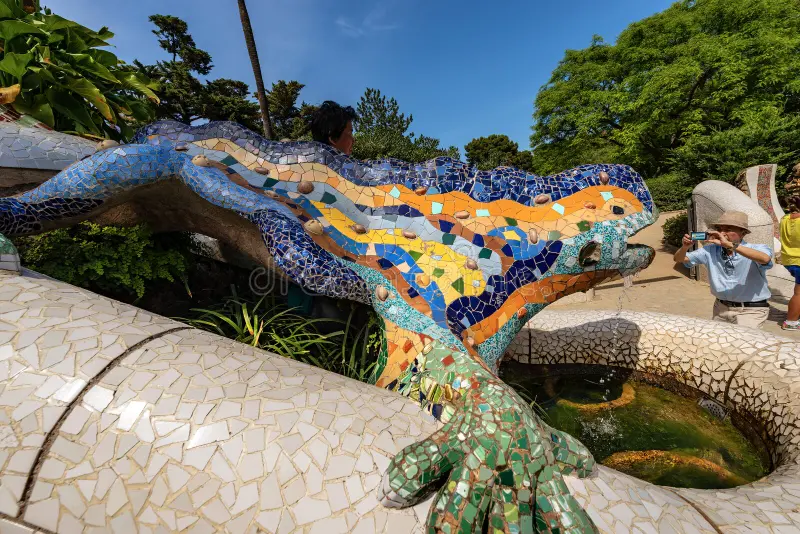
The so-called Park Güell dragon is a figure covered in trencadís, a decorative technique that uses fragments of ceramic in different colours. It stands on the monumental staircase next to the park’s main entrance.
Although it is popularly known as El Drac, its elongated body and four legs resemble a salamander. This is why it is also referred to as Gaudí’s salamander. Both names describe the same figure.
The meaning of Gaudí’s Salamander
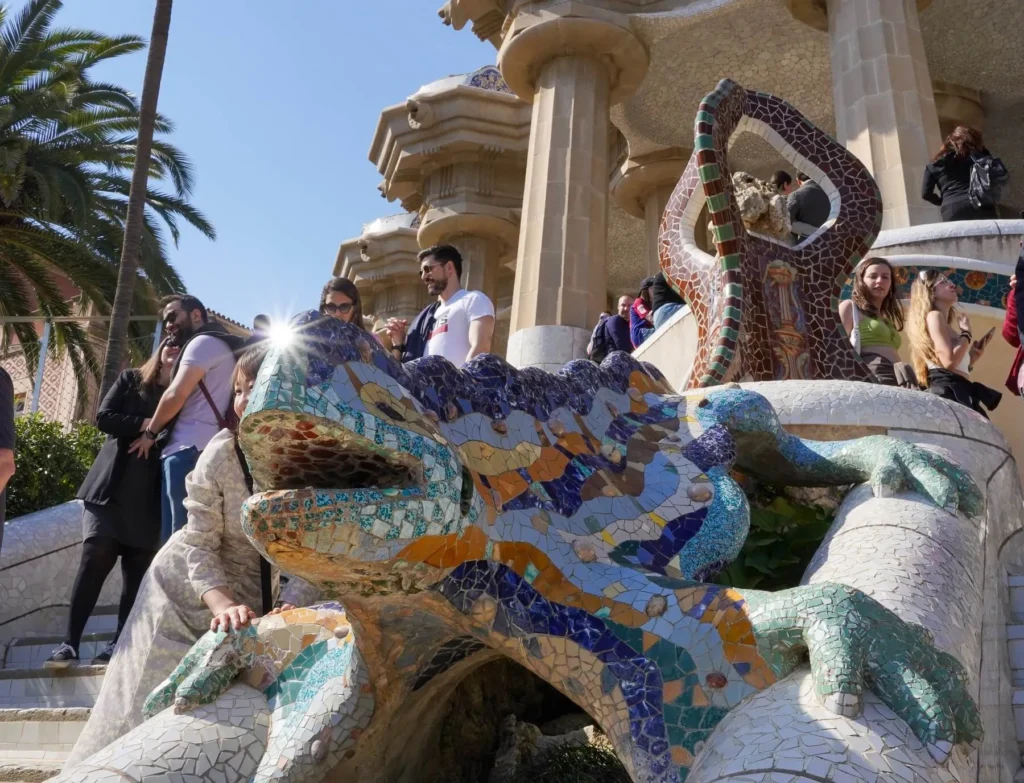
There is no documented explanation that assigns an exact meaning to the figure. The most accurate interpretation is to view it as an open representation connected to several recurring themes in Gaudí’s work.
First, the animal reflects the importance of nature in his architecture. Its curved forms, organic appearance and mosaic colours make it look like a creature integrated into the surrounding landscape.
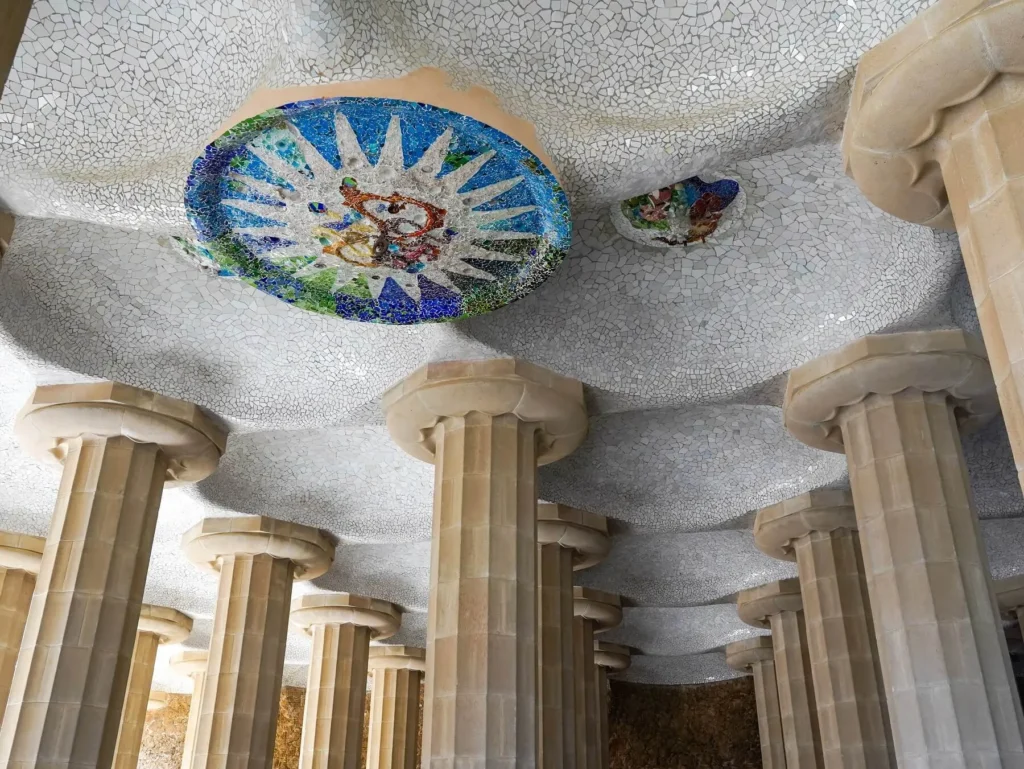
It is also connected to water. The salamander forms part of the staircase’s fountain system, which is linked to the cistern beneath the Hypostyle Room. In this way, Gaudí transformed a practical piece of infrastructure into a decorative feature.
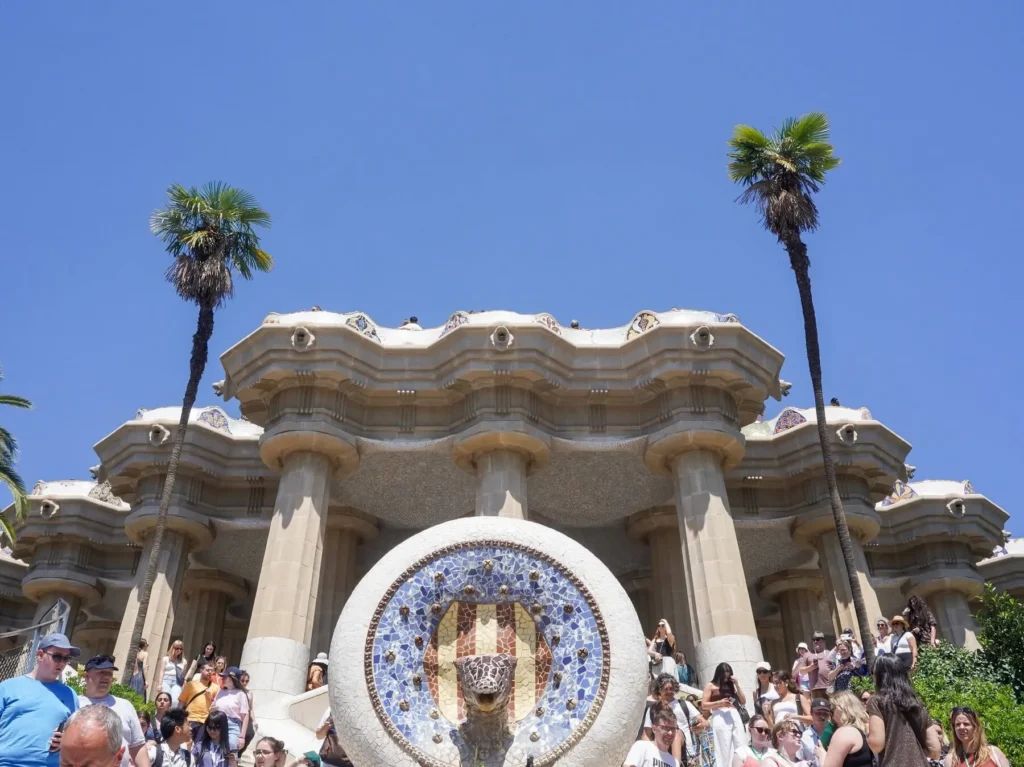
Another theory connects the figure with the dragon of Saint George, the patron saint of Catalonia. This interpretation is plausible because the Catalan coat of arms also appears on the same staircase. However, it should be understood as a possible interpretation rather than a proven meaning.
Why is it considered a salamander?
The figure does not resemble the winged dragon commonly found in medieval stories. Its anatomy looks more like a salamander or a four-legged reptile.
In different traditions, salamanders have been associated with fire, endurance and transformation. These ideas have led to several symbolic interpretations, although there is no conclusive evidence that Gaudí intended to represent those exact concepts.
The ambiguity between dragon and salamander is precisely one of the reasons why the figure continues to attract so much curiosity.
What symbols and curiosities surround Gaudí’s Dragon?
The dragon forms part of a larger ensemble on the Park Güell staircase, which includes fountains, fantastic figures, plant motifs and the Catalan coat of arms. The staircase leads to the Hypostyle Room, originally designed as the market for the residential development, combining symbolism, architecture and practical functions.
The salamander is also linked to the water circulation system, meaning that it is more than a decorative sculpture. Its trencadís covering creates the appearance of scales and reflects the light differently depending on the time of day.
Its central position and vivid colours have made it the most recognisable and photographed image in Park Güell, a project that Gaudí and Eusebi Güell originally conceived as a garden city.
How can you include it in a visit to Park Güell?
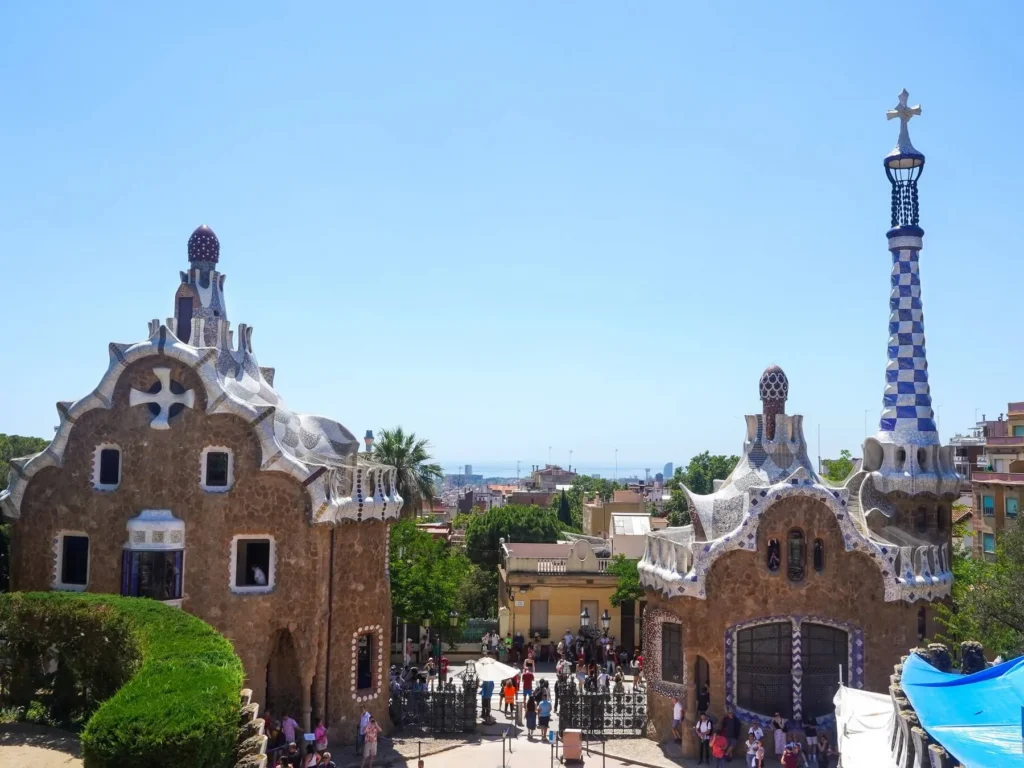
Allow between 90 minutes and two hours to explore the park. After seeing the entrance pavilions, walk slowly up the staircase, observe the Catalan coat of arms and continue towards the Hypostyle Room and Nature Square.
It is advisable to book your ticket in advance and check the official opening times, as tourist access is organised through timed admission slots.
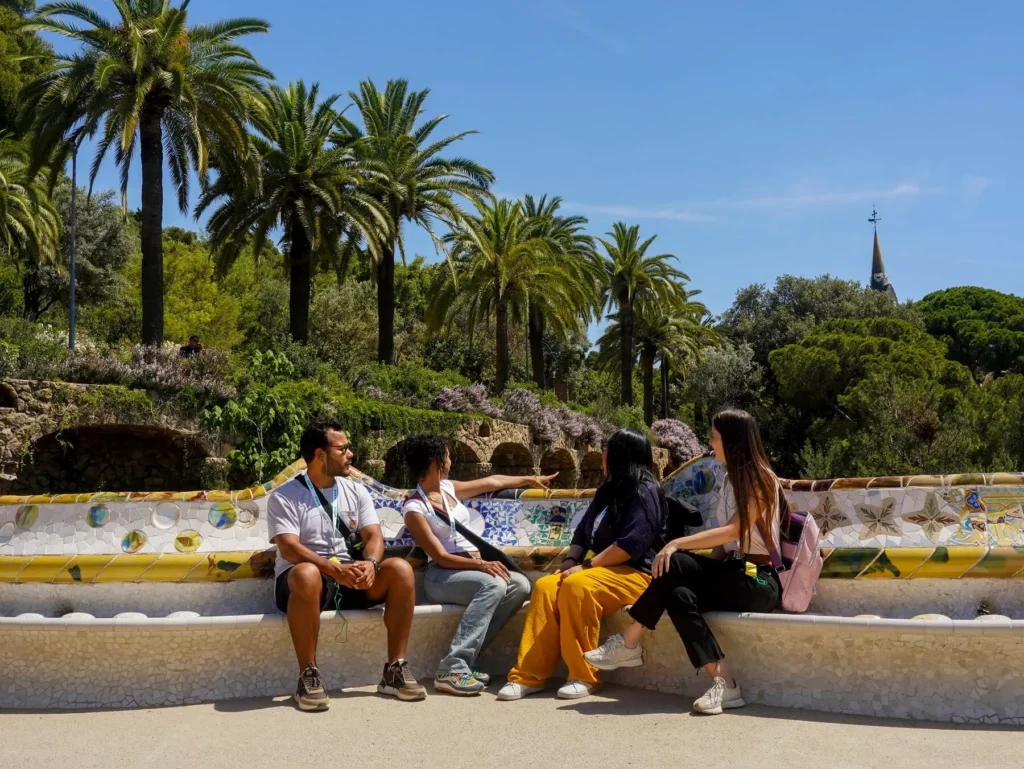
Visit Park Güell and the Sagrada Família on the same day, with fast-track access and transport included. 👉 Book the experience with Julià Travel
How can you get there with Barcelona City Tour?
Park Güell is located in an elevated area, some distance from several monuments in the city centre. You can include it in your Barcelona City Tour itinerary and then continue towards other works by Gaudí without having to reorganise your entire day.
Check the Barcelona sightseeing bus map and timetable in advance and allow enough time to walk from the stop to the park entrance.
📍 Hop on our Barcelona City Tour bus and hop off at the Park Güell stop
Frequently Asked Questions
Is Gaudí’s Dragon a Dragon or a Salamander?
It can be called either. Its body resembles a salamander, while its fantastic appearance explains the name El Drac. They are not different sculptures, but two names for the same figure.
Does it represent Sant Jordi Dragon?
This is a possible interpretation because of the importance of Saint George in Catalonia and the presence of the Catalan coat of arms on the staircase. However, there is no definitive confirmation that this is its only meaning.
What do its colours symbolise?
There is no documented colour code. The green, blue, yellow and orange tones create the appearance of scales and visually connect the animal with water, vegetation and the decorative language of the park.
Where is the Park Güell Dragon located?
It stands on the monumental staircase near the main entrance. It appears before visitors reach the Hypostyle Room and forms part of the group of fountains and figures that organise the entrance route.
How much time is needed to see it?
The figure itself can be seen in just a few minutes, but it is advisable to spend between 90 minutes and two hours in Park Güell. This allows you to understand its relationship with the staircase, the Hypostyle Room and the park’s other monumental spaces.