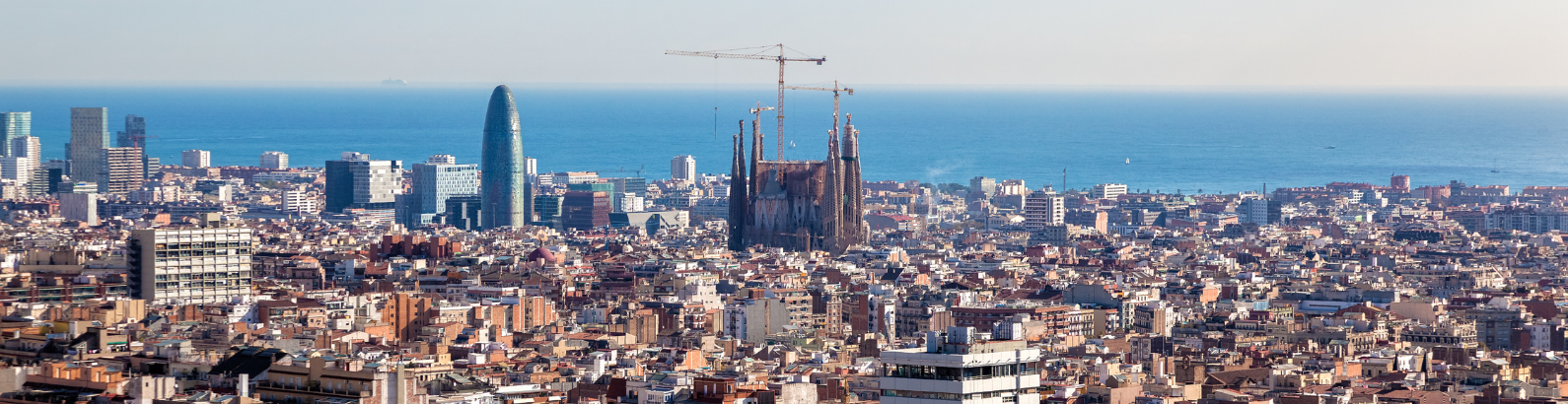


Barcelona is a city famous for its architecture, but not only for Modernism or landmarks such as the Sagrada Família. It also stands out for its highly recognisable skyline, where historic temples, seafront towers and contemporary buildings come together to shape the city’s urban profile.
If you have ever wondered which the tallest buildings in Barcelona are or what the tallest building in Barcelona is, the answer deserves more than a quick fact.
The city does not have as many skyscrapers as other major European capitals, and that is precisely why its tallest buildings attract so much attention. Each one tells a different part of Barcelona’s story: the spiritual, the Olympic, the technological and the more modern side. Some stand out because of their height, others because of their location, and others because they have become visual icons that every traveller recognises instantly.
What is the tallest building in Barcelona?
In this guide, we take a look at the tallest buildings in Barcelona, what makes them special and where they are worth seeing during your visit.
At present, the tallest building in Barcelona is the Sagrada Família, which reached 172.5 metres with the completion of the Tower of Jesus Christ. This is an important fact because for many years the debate about height in Barcelona was dominated by the large skyscrapers along the seafront.
However, if we are talking about skyscrapers, the tallest are still Hotel Arts and Torre Mapfre, both standing at 154 metres. That difference explains why many travellers still associate Barcelona’s skyline with the towers of Port Olímpic.
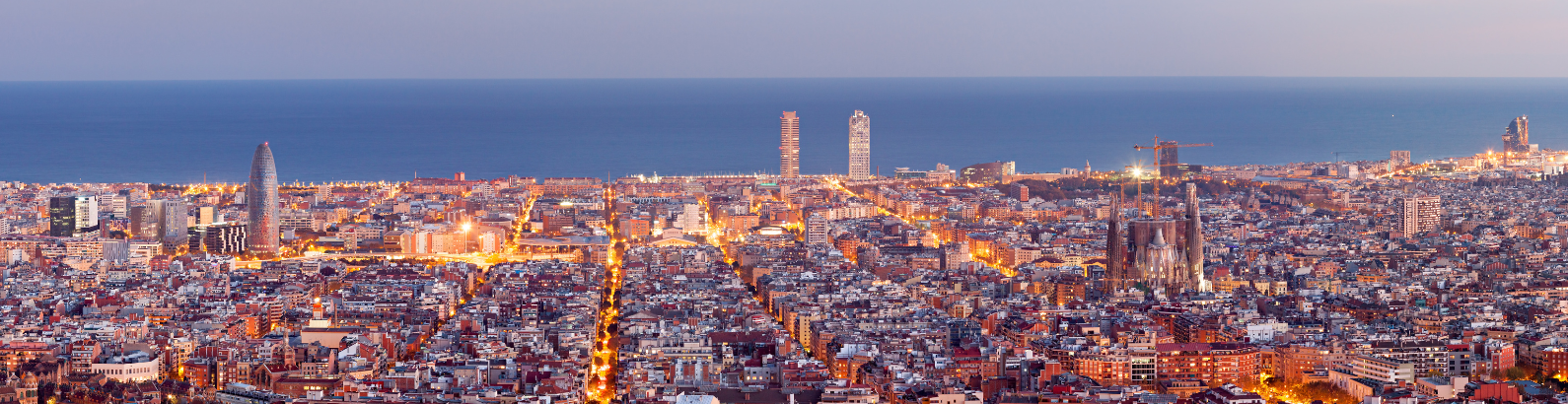
The tallest buildings in Barcelona
Sagrada Família, 172.5 m
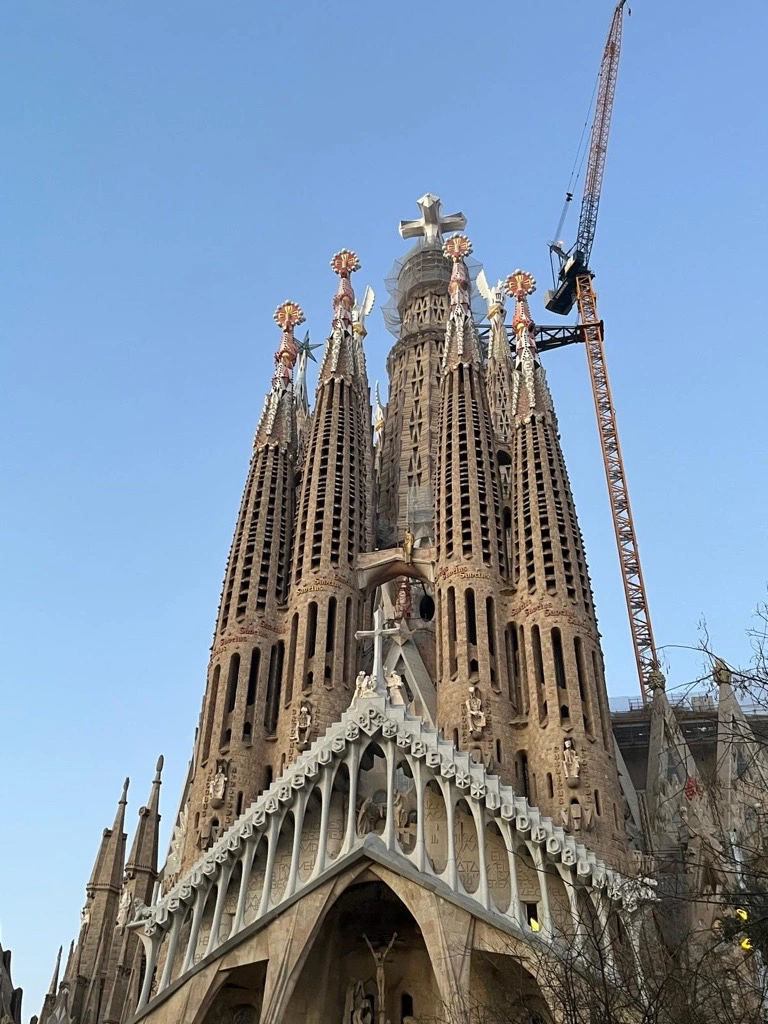
The Sagrada Família is not only Barcelona’s most famous monument, but also the tallest building in the city.
What is most fascinating is that its height is not accidental. Gaudí conceived the temple as a deeply symbolic work, and the main tower was meant to rise monumentally without surpassing natural creation. That is why its final height was planned in relation to its surroundings and to the idea of harmony between architecture and nature.
Beyond its height, the Sagrada Família is striking because it does not feel like a conventional skyscraper.
For many travellers, seeing it up close is impressive, but observing it from a certain distance makes it easier to understand why it now leads Barcelona’s skyline, since from the wide avenues of the Eixample you can see how it rises above the urban fabric.
Anyone visiting Barcelona for the first time often thinks of it as an isolated monument, but while moving around the city you discover that it also works as a major visual axis. In many places it appears in the background, crowning streets and adding depth to the urban landscape.
🚌 If you want to admire it up close and enjoy one of Barcelona’s most impressive works, you can get off at the Sagrada Família stop on Barcelona City Tour.
Hotel Arts, 154 m
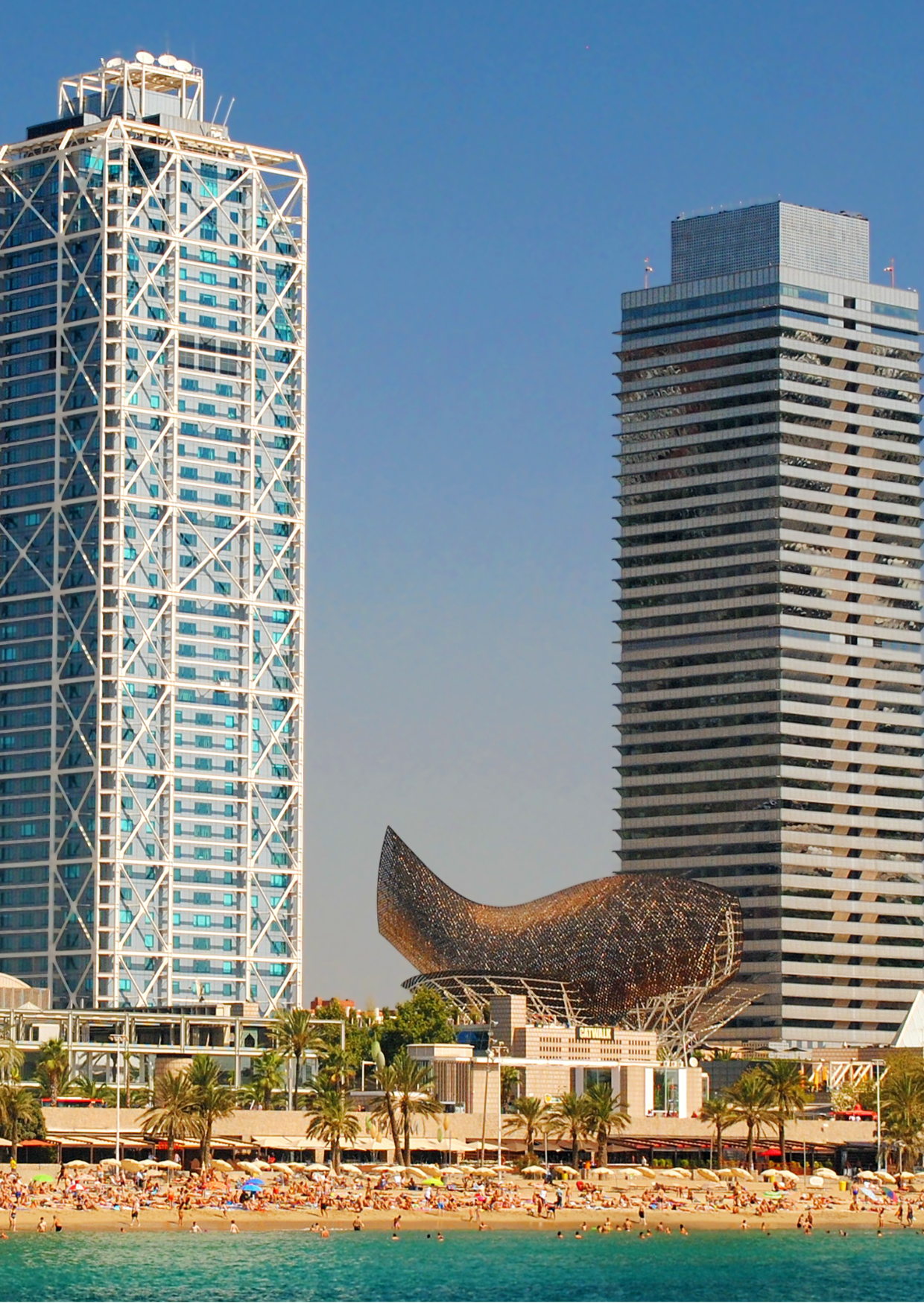
Hotel Arts is one of the great icons of Barcelona’s seafront and one of the tallest skyscrapers in the city. Located next to Port Olímpic, its glass silhouette has become an immediate point of reference for those walking along the coast or looking at the city from the sea.
Its importance is closely linked to the urban transformation brought about by the 1992 Olympic Games. Barcelona used that moment to open itself up to the Mediterranean and redefine many areas of the city. Hotel Arts was born in that context and still represents that modern, international Barcelona connected to the coastline.
Visually, it stands out for its elegant vertical structure, with a glass façade that reflects the light of the sea and the sky. That combination means it changes greatly depending on the time of day: bright under the sun, golden at sunset and sophisticated at night.
Although it is a luxury hotel, its appeal goes far beyond accommodation. It has become a fundamental part of Barcelona’s skyline. Many panoramic photos of the city include its profile, almost always in dialogue with the nearby Torre Mapfre.
🚌 To see it by the sea and understand why it remains one of the great icons of Barcelona’s skyline, a good option is to get off at the Port Olímpic stop.
Torre Mapfre, 154 m
Torre Mapfre shares the same height as Hotel Arts, and together they form the most famous skyscraper duo in Barcelona. If you have ever seen an image of Port Olímpic, you have probably already recognised it, because its profile is inseparable from that part of the seafront.
Its image is more sober and corporate than that of Hotel Arts, but that is precisely where part of its strength lies. Torre Mapfre conveys modernity, stability and an aesthetic closely linked to late twentieth century architecture, when Barcelona committed to an ambitious urban renewal.
The most interesting thing about this tower is its role within the landscape. It does not function only as an isolated building, but as part of an urban composition. Together with Hotel Arts, it creates an almost symmetrical visual effect that brings balance and personality to the seafront skyline.
For many visitors, these two towers were for years the natural answer to the question of which the tallest buildings in Barcelona were. And although the Sagrada Família now holds the absolute first place, Torre Mapfre still occupies a privileged place in the city’s visual memory.
Its location by the sea greatly enhances its impact. It is not the same to find a tall tower in a financial district as it is to see one rising on the edge of the Mediterranean.
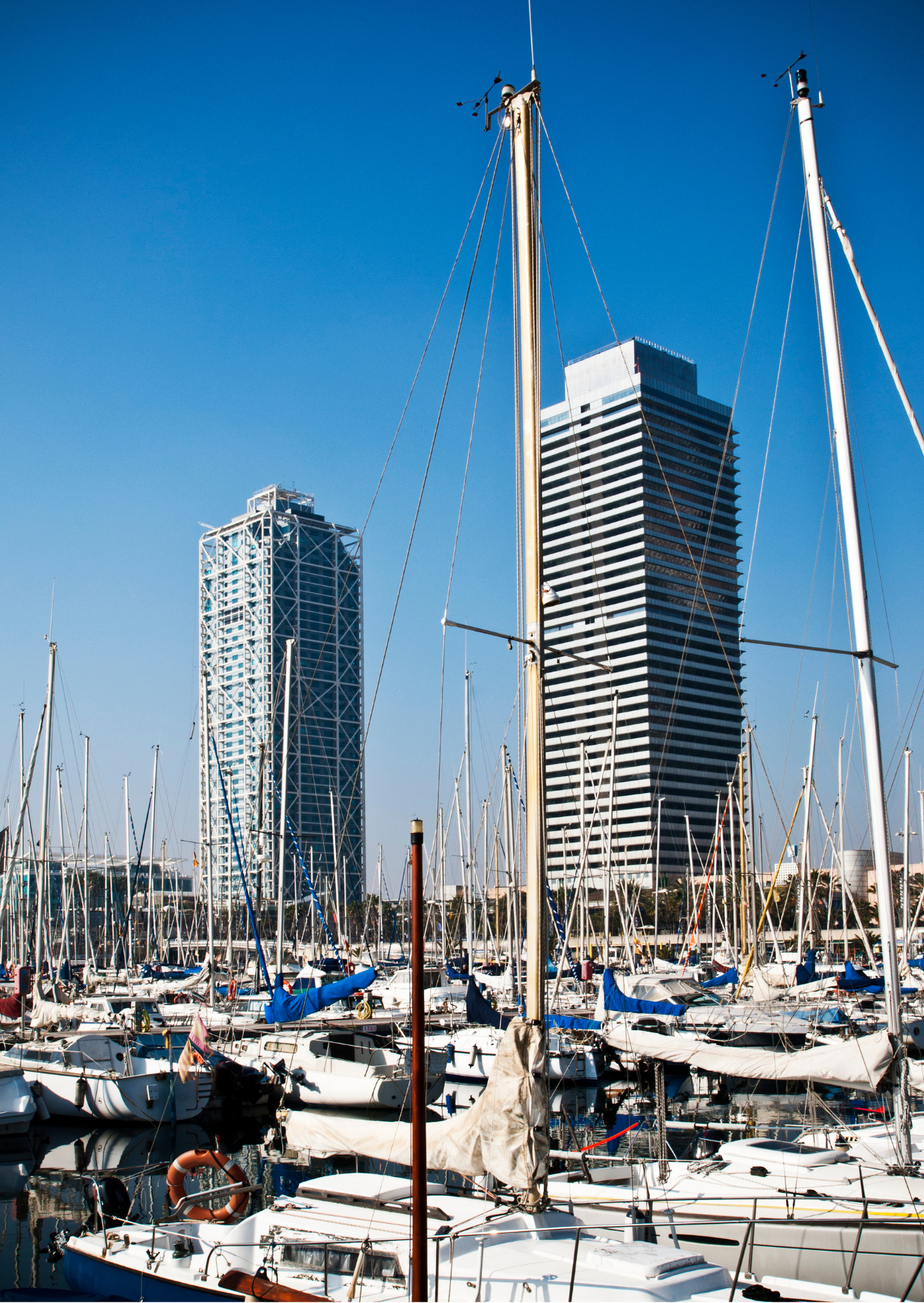
🚌 If you would like to admire this tower on the seafront and combine the visit with a walk along the coast, you can do so from the Port Olímpic stop.
Torre Glòries, 144 m
Torre Glòries, known for many years as Torre Agbar, is probably the most recognisable contemporary building in Barcelona. Its rounded shape and futuristic appearance make it completely different from the rest of the city’s tall towers.
For a long time, it was for many travellers the symbol of modern Barcelona. Although it does not rank first in height, it carries enormous visual weight. There are taller buildings, but very few are so easy to identify just by looking at their silhouette.
Its design breaks with the classic idea of the rectangular skyscraper. That gives it a very distinctive character and makes it stand out especially when seen from wide avenues or elevated parts of the city. It does not look like just another building. It looks like an architectural statement.
It is located in the Glòries area, a key place for understanding Barcelona’s recent evolution. Here, major avenues, new urban developments and the 22@ technological district come together, one of the areas that best represents the city’s economic transformation.
Torre Glòries is also well known for its illuminated façade. When night falls, its presence changes completely and becomes even more eye catching.
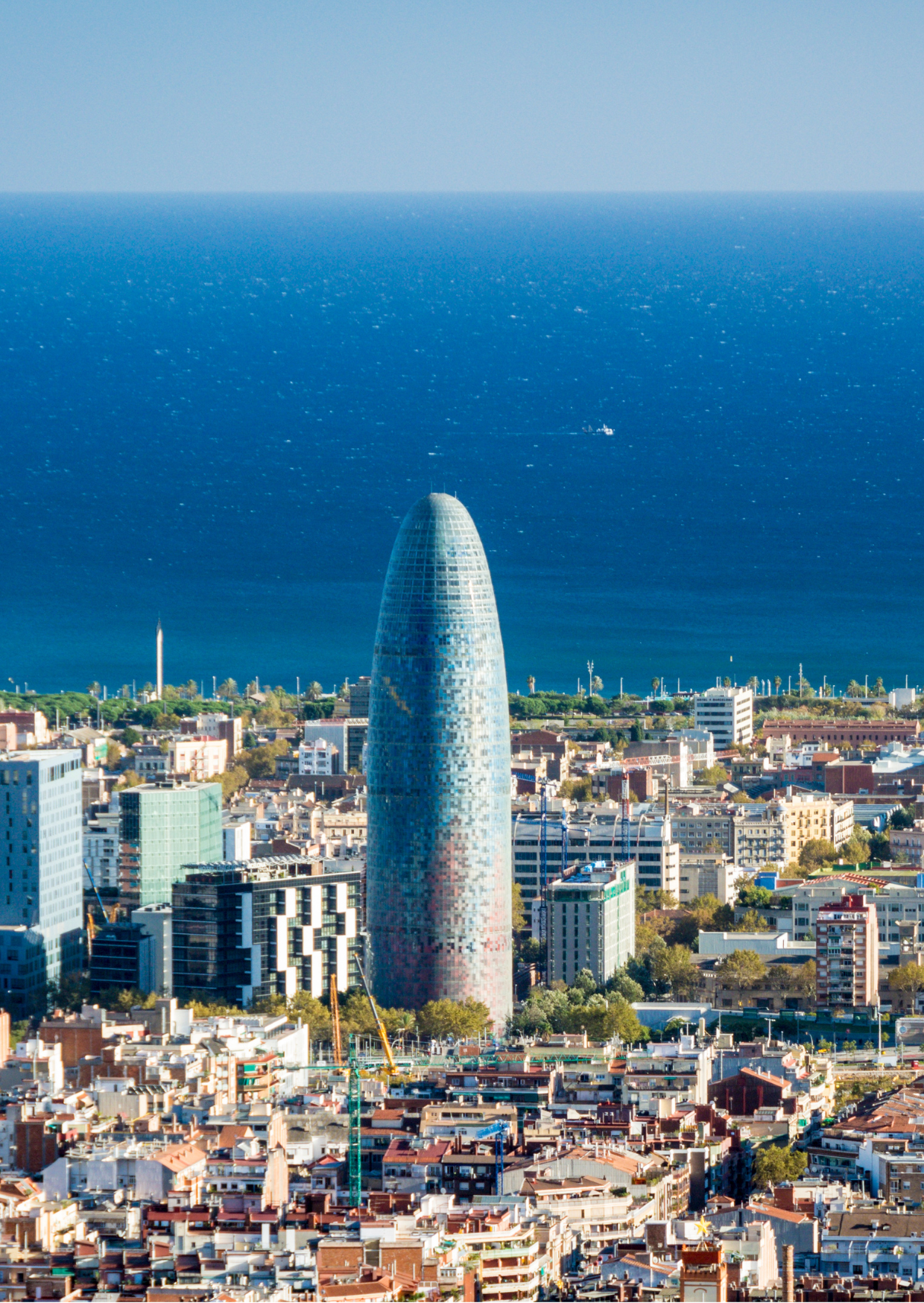
🚌 To discover one of the most recognisable buildings in contemporary Barcelona up close, you can get off at the Torre Glòries or Agbar Tower stop.
Meliá Barcelona Sky, 116 m
Meliá Barcelona Sky brings a different kind of verticality to the city’s skyline. Located in Sant Martí, its sleek profile fits perfectly into Barcelona’s more modern side, the one that grows between Poblenou, the 22@ district and the nearby sea.
Its design conveys modernity and sophistication. As it is linked to hotel use, it projects an image closely tied to contemporary urban tourism, city breaks with a touch of comfort, design and panoramic views.
That makes Meliá Barcelona Sky more than just a tall building. It is a reflection of the city’s transformation. It represents a Barcelona that continues to expand and update its profile without losing its link to the sea and to neighbourhoods in transition.
From certain perspectives, especially while moving around the Sant Martí neighbourhood, its silhouette appears as a clear point of reference within the urban landscape. It does not dominate the whole city, but it certainly brings personality to an area that increasingly attracts curious visitors.
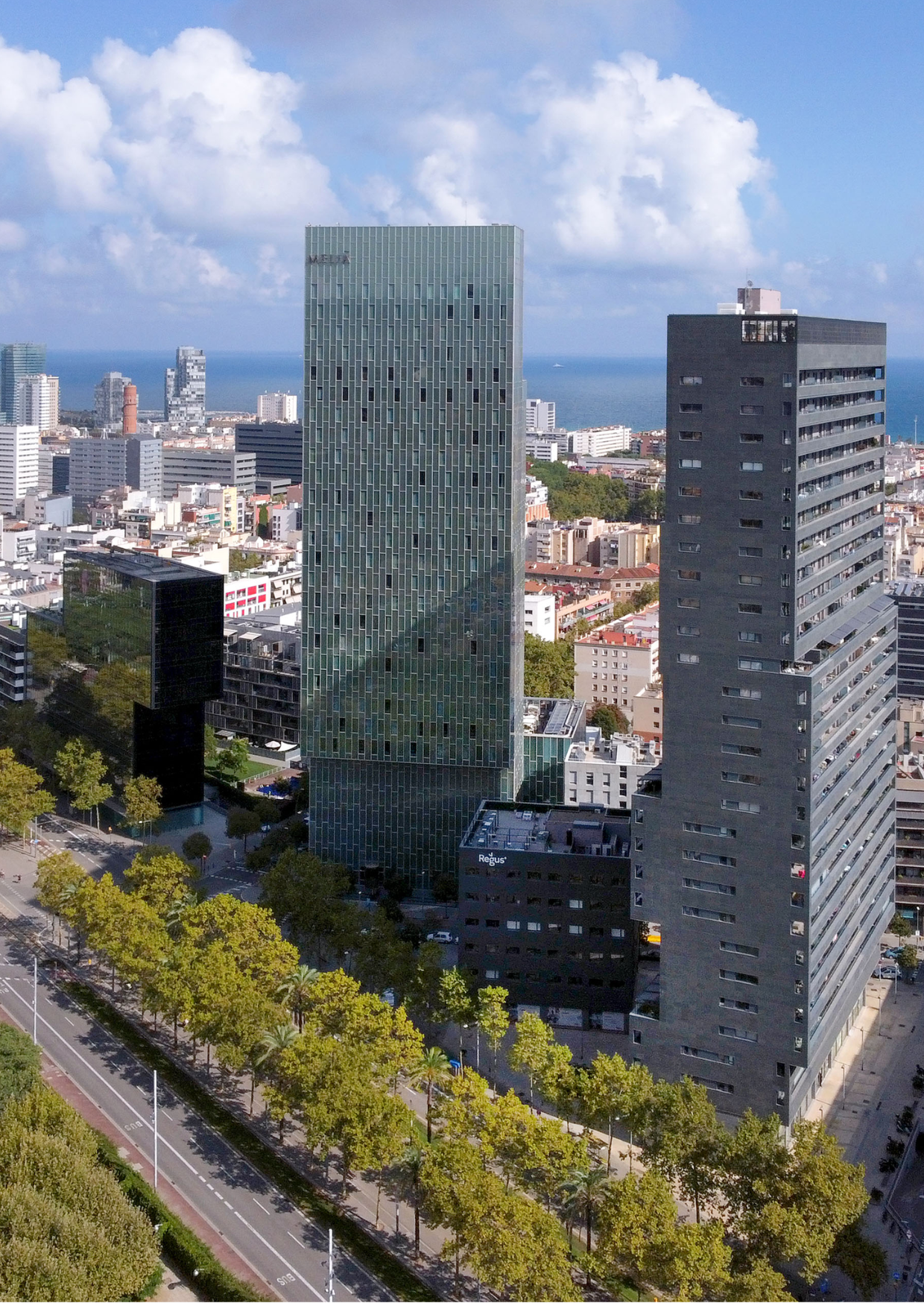
🚌 To discover this more contemporary side of Sant Martí and complete your visit with other recent architectural icons, you can get off at the Torre Glòries stop.
Diagonal Zero Zero, 110 m
Diagonal Zero Zero is one of the buildings that best represents the most recent expansion of Barcelona’s skyline towards the Fòrum area. At 110 metres, it is not among the best known giants, but it stands out for its clean, contemporary image and its close connection to today’s corporate architecture.
Construction began in 2008 and the building was completed in 2011, at a time when this part of Barcelona was strengthening its more modern and business oriented profile. Designed by Enric Massip Bosch, the tower quickly became a recognisable feature of the new seafront urban landscape.
Unlike other taller and more iconic buildings, the attraction here lies less in tourist symbolism and more in its role within a more contemporary Barcelona. The tower was conceived to house Telefónica’s corporate headquarters in Catalonia, along with spaces related to its technological activity and innovation.
That connection with Telefónica reinforces its value as a symbol of a city linked to business, technology and new economic hubs.
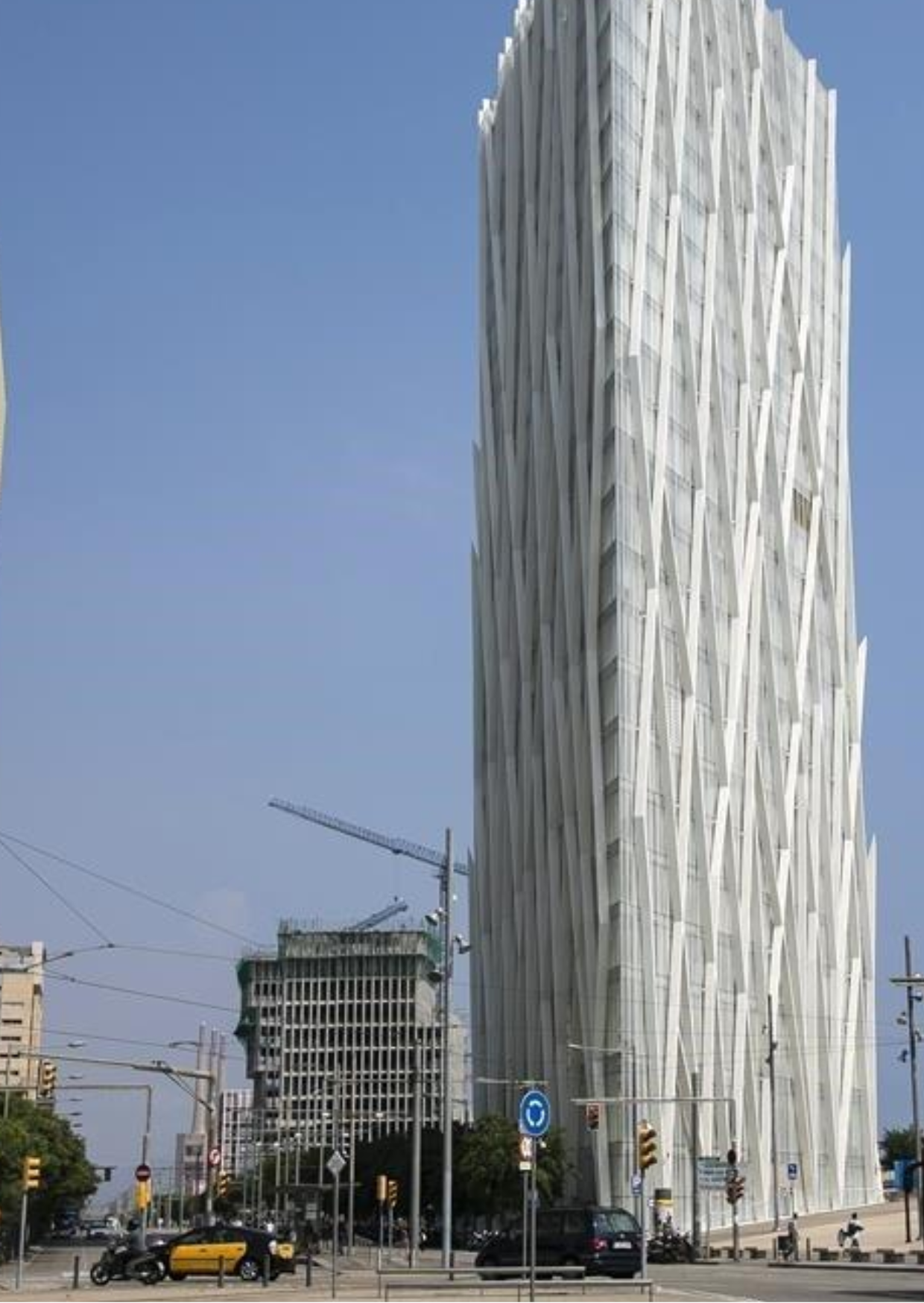
🚌 If you want to get closer to this tower and explore the most modern side of Barcelona around the Fòrum and Diagonal area, you can get off at the Avinguda Diagonal stop.
Colón Building, 110 m
The Colón Building is one of the most visible vertical landmarks in central Barcelona’s port area. Although it is often left out of the most popular lists, its location makes it a very recognisable reference point near the harbour and some of the areas most visited by travellers.
While other tall buildings in Barcelona are concentrated in more modern districts, the Colón Building appears in a setting where maritime history, urban activity and a strong tourist presence coexist. That gives it a special character within the skyline.
It stands out not so much because of a groundbreaking shape, but because of its ability to make itself noticed in a highly strategic area. Looking up in the port district, its volume helps define the horizon and distinguish this sector from other parts of the city.
From some points near the coastline and port front, its silhouette contributes to that feeling of a city open to the sea, diverse in style and with very different architectural layers.
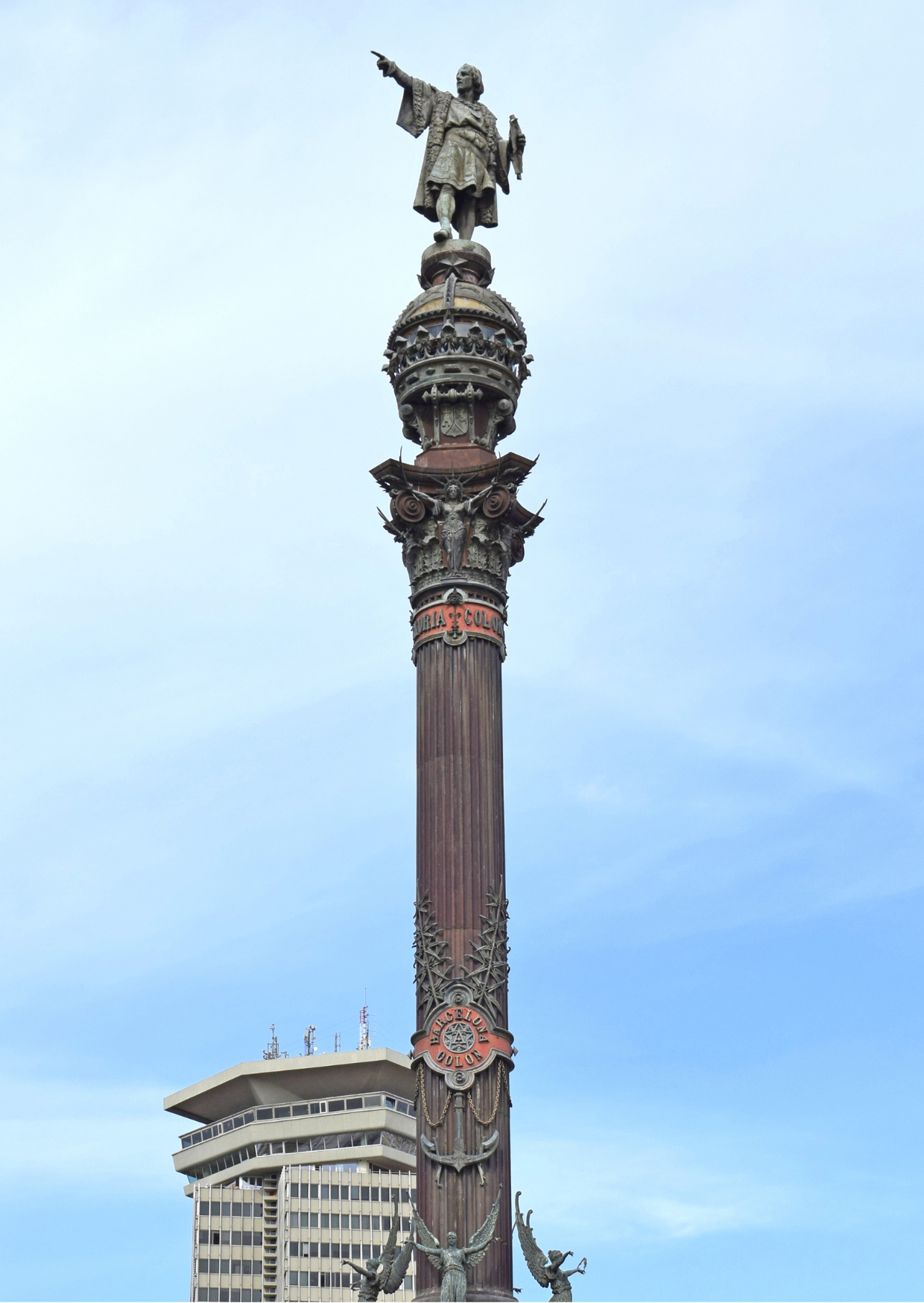
🚌 To include it in a walk around the port and the historic seafront, a good option is to get off at the Passeig de Colom stop.
Why doesn’t Barcelona have as many skyscrapers as other cities?
One of the reasons this topic generates so much interest is that Barcelona does not fit the model of a city dominated by towers. Its image is built in a different way. Here, the Eixample grid, the Modernist heritage, the historic neighbourhoods and the constant relationship with the sea carry much more weight.
That means each tall building stands out more. In cities with dozens of skyscrapers, one more tower may go unnoticed. In Barcelona, by contrast, every building that rises above the rest becomes a landmark.
The city has grown while maintaining a fairly recognisable scale, which is why its tallest buildings tend to be concentrated in specific areas or in key moments of urban transformation, such as Olympic Barcelona or the expansion towards new zones of activity.